
Published on March 5, 2024
The Unsung Heroes: How Mobile App Testers Shape the Digital Future
In the fast-paced world of mobile app development, there exists a dedicated community of individuals whose contributions often go unnoticed by the general public, yet their impact resonates through every tap, swipe, and interaction we make on our smartphones. These are the mobile app testers – the unsung heroes who bridge the gap between developers' visions and users' needs, ensuring that the apps we rely on daily function seamlessly across diverse devices and scenarios.
The Critical Role of Testers in the Mobile Ecosystem
Mobile app testers serve as the first line of defense against bugs, usability issues, and accessibility barriers that could otherwise frustrate millions of users. Their work extends far beyond simply clicking buttons and reporting crashes. These dedicated individuals immerse themselves in applications, exploring edge cases, testing on various devices, and providing nuanced feedback that developers might never discover in their controlled development environments.
The mobile ecosystem is incredibly diverse, with thousands of device models, operating system versions, screen sizes, and hardware configurations. What works perfectly on a flagship smartphone might fail catastrophically on a mid-range device from two years ago. Testers help developers navigate this complexity by providing real-world data from actual devices in actual usage conditions – something no automated testing suite can fully replicate.
Moreover, testers bring a fresh perspective that development teams, who have been working on an app for months, often lack. They approach applications with the mindset of end users, identifying confusing interfaces, unclear instructions, and workflow inefficiencies that might seem obvious in hindsight but are invisible to those too close to the project.
Direct Influence on Development Decisions
The relationship between testers and developers has evolved significantly over the years. What was once a one-way street of bug reports has transformed into a collaborative dialogue that directly shapes product roadmaps and feature prioritization. Sarah Chen, Lead Developer at a prominent fintech company, explains: "Our testers don't just tell us what's broken – they help us understand why users might struggle with certain features. Their insights have led us to completely redesign core functionalities that we thought were intuitive but clearly weren't."
This feedback loop creates a powerful synergy. When testers identify that users consistently struggle with a particular workflow, developers can address the root cause rather than just patching symptoms. When testers report that a feature feels sluggish on older devices, optimization becomes a priority rather than an afterthought. When testers highlight accessibility issues, inclusive design moves from a checkbox item to a fundamental principle.
The data testers provide also helps development teams make informed decisions about resource allocation. If testers consistently report issues with a specific feature across multiple testing cycles, it signals that more development time should be invested in that area. Conversely, features that test well can be fast-tracked for release, accelerating time-to-market for successful innovations.
Marcus Rodriguez, Product Manager at a social media platform, shares his perspective: "We've learned to treat our testing community as an extension of our product team. Their feedback doesn't just influence minor tweaks – it has fundamentally changed how we approach feature development. We now prototype with tester feedback in mind from day one, which has dramatically improved our success rate with new releases."
Improving User Experience Through Real-World Testing
User experience is notoriously difficult to quantify in development environments. Developers can measure load times, count clicks, and analyze user flows, but they can't easily capture the emotional response users have when interacting with an app. This is where testers become invaluable – they provide the human element that metrics alone cannot capture.
Testers experience apps in real-world conditions: on crowded trains with spotty connectivity, in bright sunlight where screen glare becomes an issue, while multitasking between multiple apps, or when battery life is critically low and performance throttling kicks in. These scenarios reveal usability issues that never surface in controlled testing environments with perfect WiFi and fully charged devices.
The qualitative feedback testers provide is equally important. Comments like "this button feels too small to tap accurately" or "I expected this action to happen when I swiped, not when I tapped" provide insights that no analytics dashboard can deliver. These observations help developers understand not just what users do, but what they expect and how they feel about their interactions.
Jennifer Park, UX Designer at an e-commerce platform, emphasizes this point: "Our testers have become our eyes and ears in the real world. They've caught issues like confusing checkout flows, unclear error messages, and frustrating navigation patterns that our internal team missed completely. Their feedback has directly led to a 40% reduction in cart abandonment rates and significantly higher user satisfaction scores."
Ensuring Accessibility for Diverse User Groups
Perhaps one of the most impactful contributions testers make is in the realm of accessibility. While developers may test with screen readers and other assistive technologies, testers who actually rely on these tools daily provide irreplaceable insights into how accessible an app truly is. They identify barriers that might not be obvious to developers without disabilities, ensuring that apps work for everyone, regardless of their abilities.
Accessibility extends beyond supporting users with disabilities. It encompasses users with temporary impairments (like a broken arm), situational limitations (like using an app in a noisy environment), or those who simply prefer alternative interaction methods. Testers from diverse backgrounds help ensure apps work well for elderly users who might not be as tech-savvy, for users in regions with slower internet connections, and for those using older devices that remain common in many markets.
The geographic and demographic diversity of testing communities also helps developers understand cultural nuances that affect app usage. Color choices that work well in one culture might have negative connotations in another. Interface patterns that feel intuitive to users in one region might confuse users elsewhere. Testers help bridge these cultural gaps, ensuring apps resonate with global audiences.
David Thompson, Accessibility Lead at a healthcare app company, notes: "Our testing community includes users with various disabilities, and their feedback has been transformative. They've helped us understand that accessibility isn't about checking boxes – it's about creating genuinely inclusive experiences. Features we implemented based on their suggestions have not only helped users with disabilities but have improved the experience for all our users."
The Feedback-to-Implementation Cycle
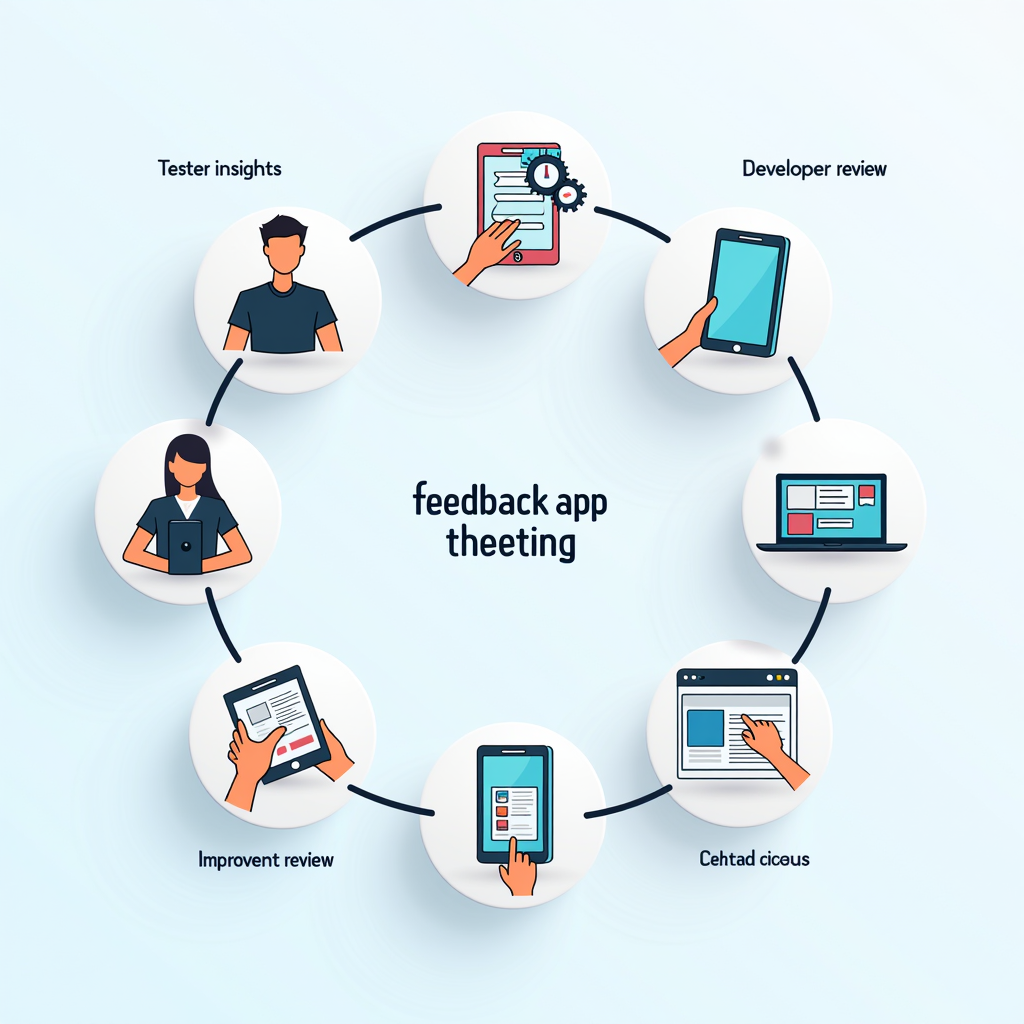
The journey from tester feedback to implemented feature is a fascinating process that demonstrates the collaborative nature of modern app development. It typically begins with testers exploring new features or updates in beta versions, documenting their experiences, and submitting detailed reports through testing platforms. These reports are then triaged by development teams, who categorize issues by severity, frequency, and impact.
High-priority issues identified by multiple testers quickly move to the top of development queues. Developers investigate the root causes, implement fixes, and push updated builds back to testers for verification. This cycle repeats until the app meets quality standards, with each iteration incorporating tester feedback and refining the user experience.
What makes this cycle particularly effective is the speed at which it operates. In traditional software development, feedback loops could take weeks or months. In modern mobile development, with dedicated testing communities, this cycle can complete in days or even hours for critical issues. This rapid iteration enables developers to be more experimental and innovative, knowing they have a safety net of engaged testers who will quickly identify any problems.
The cycle also creates a sense of ownership and investment among testers. When they see their feedback implemented in subsequent releases, it validates their contributions and motivates continued engagement. Many testers report feeling a genuine connection to the apps they test, taking pride in knowing they helped shape products used by millions.
Looking Forward: The Evolving Role of Testers
As mobile technology continues to evolve, so too does the role of testers. The emergence of new technologies like augmented reality, artificial intelligence, and 5G connectivity creates new testing challenges and opportunities. Testers are increasingly being asked to evaluate not just functionality, but also how apps integrate with emerging technologies and adapt to new usage patterns.
The rise of privacy-conscious users has also elevated the importance of testers in identifying potential privacy issues and data handling concerns. Testers serve as advocates for user privacy, flagging unnecessary permissions, unclear data policies, and potential security vulnerabilities before apps reach the general public.
Moreover, as apps become more complex and interconnected, testers play a crucial role in ensuring seamless integration between different services and platforms. They verify that apps work correctly with various third-party services, that data syncs properly across devices, and that the overall ecosystem functions cohesively.
The future of mobile app testing is bright, with testers becoming increasingly recognized as essential partners in the development process rather than just quality assurance resources. Their contributions will continue to shape the mobile landscape, ensuring that the apps we depend on daily are reliable, accessible, and genuinely useful for diverse user populations around the world.
The mobile app testers of today are building the foundation for tomorrow's digital experiences. Their dedication, attention to detail, and user-focused perspective ensure that the mobile ecosystem continues to evolve in ways that benefit everyone. As we swipe, tap, and interact with our devices, we're experiencing the direct result of countless hours of testing, feedback, and refinement – a testament to the meaningful contribution these unsung heroes make to our digital lives.